
Does Cardio Increase Cortisol?
The wellness wankers are at it again

The wellness wankers are at it again, this time it;s their ‘I balanced my hormones naturally’ list that involves swapping high intensity cardio for low intensity cardio with the claim that this is lowers cortisol.
Where to even fucking start.
I wrote a few pieces on stress and cortisol a while back and the information still holds up so if you’re interested in the deep dive, start there and come back.


Cortisol Isn’t Bad
Before we have this conversation, It’s really important to understand what normal cortisol levels look like.
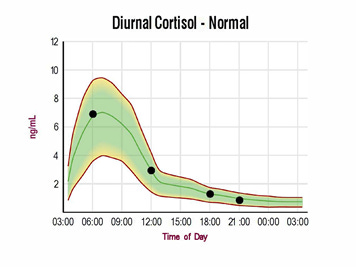
The above diagram shows a normal HEALTHY cortisol slope. A healthy cortisol slope follows a distinct daily rhythm: it surges by 50–60% within 30 to 40 minutes of waking, drops rapidly over the next few hours, and steadily declines to a low resting point by bedtime.
The 4 dots on this diagram represent salvia samples taken at 4 points during the day. Now the only way to know if you truly had an unhealthy cortisol curve would be to have salvia samples taken at least 4 times per day, and in most cases you’d want to do this for several days to make sure the slope was consistent.
An unhealthy, ‘flat’ slope fails to drop, signalling chronic stress or exhaustion like in the example below.
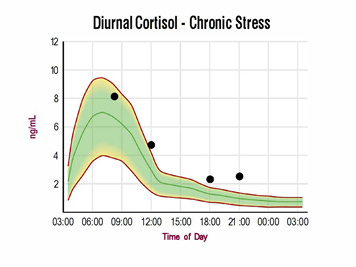
There’s also Hyperactive Slope: Cortisol stays elevated above normal ranges throughout the entire 24-hour cycle. And: Hypoactive Slope: Cortisol is abnormally low across the entire day, failing to trigger the necessary morning surge. It’s worth repeating that most people do not have unhealthy cortisol slopes, these are clinical and you’d probably have a diagnosis.
Back To Cardio
The social media claim that high intensity cardio elevates cortisol has a grain of truth but oversimplifies the science.
Yes, high intensity exercise does raise cortisol more than low intensity exercise, that's confirmed in research. However, this is an important distinction:
acute cortisol elevation during and immediately after exercise is a normal, healthy physiological response that is completely different from chronic elevated cortisol, which is what causes stress-related problems.
This study showed that acute cortisol exposure from a single 40 minute bout of high intensity exercise had no negative effects on immune function, while only chronic cortisol exposure dampened immune cell activity.
The Bigger Picture
The bigger picture, which is what actually matters for your health, is that high intensity and low intensity exercise can reduce stress hormone levels over time.
This study found that both moderate intensity interval and continuous aerobic exercise significantly reduced cortisol secretion and HPA axis activity in a group of women. And this one demonstrated that after 8 weeks of moderate intensity aerobic training, cortisol levels decreased substantially in participants with opioid use disorder.

Your Body Might Need Some Stress
An interesting finding from this 2021 study is that vigorous exercise appears to blunt subsequent stress responses, as in, it makes later stress easier to deal with. This dampened HPA reactivity was inversely related to cortisol release, vigorous exercise had the biggest impact compared to moderate and light, moderate had a better impact than light but light still had an impact.
So it seems that any type of exercise gives your body a better chance at handling stress.
Wellness Wankers Have It Wrong
The benefits of vigorous cardio are well established, so swapping high intensity for low intensity based solely on cortisol concerns is really fucking stupid. And the conversation is almost annoyingly pointless because most people do not have chronically elevated cortisol levels.
Remember, the best exercise is the one you’ll do consistently. Temporary cortisol spikes from intense exercise are a normal adaptation which helps you buffer other stress more easily.
Chronic stress induced cortisol elevation is problematic. If you're concerned about cortisol, prioritise sleep, stress management and consistent exercise of any intensity. Also, stop listening to self proclaimed hormone experts.
The algorithm also compels me to ask you to like, comment and restack this post (only if you enjoyed it of course) so that new people can find me. The best way to support me is to either leave me a little tip here or by joining my fitness community - The Snack Pass. There are no paywalls here and I’d like to keep it that way. Despite myself, I also still use Instagram, so maybe follow me there too.
If just 10% of my readers on Substack joined my fitness community, it would change my life, so if you do have a few minutes spare, please click that link and check out what is on offer.
T. Luu, L. F. Hach, T. Seremet, K. Leuchte, P. T. Straten, and G. H. Olofsson, “Exercise Duration Modulates Cortisol Release and Chronic Cortisol Exposure Jeopardises T Cell Effector Functions,” Immunology, Aug. 2025, doi: 10.1111/imm.70028.
J. Park, Z. Murlasits, and S. Kim, “The Effect of Aerobic Exercise on Variation of Oxidative Stress, hs-CRP and Cortisol Induced by Sleep Deficiency,” Healthcare, Apr. 2023, doi: 10.3390/healthcare11081201.
D. Merawati, A. Pranoto, and H. Susanto, “Decreased Activity of the Hypothalamic-Pituitary-Adrenal Axis after Acute Aerobic Exercise in Obese Women,” Natural and Life Sciences Communications, Jul. 2023, doi: 10.12982/nlsc.2023.037.
A. Psarianos et al., “Cortisol and β-Endorphin Responses During a Two-Month Exercise Training Program in Patients with an Opioid Use Disorder and on a Substitution Treatment,” International Journal of Molecular Sciences, May 2025, doi: 10.3390/ijms26115178.
A. Caplin, F. Chen, M. R. Beauchamp, and E. Puterman, “The effects of exercise intensity on the cortisol response to a subsequent acute psychosocial stressor.,” Psychoneuroendocrinology, Jun. 2021, doi: 10.1016/j.psyneuen.2021.105336.
D. Wilczyńska, T. Walczak-Kozłowska, R. Santos-Rocha, R. Laskowski, and A. Szumilewicz, “Stress is not so bad—cortisol level and psychological functioning after 8-week HIIT program during pregnancy: a randomized controlled trial,” Frontiers in Public Health, Jan. 2024, doi: 10.3389/fpubh.2023.1307998.
finally someone defending cortisol! also so many references!! loved this read and looking forward to the next :)